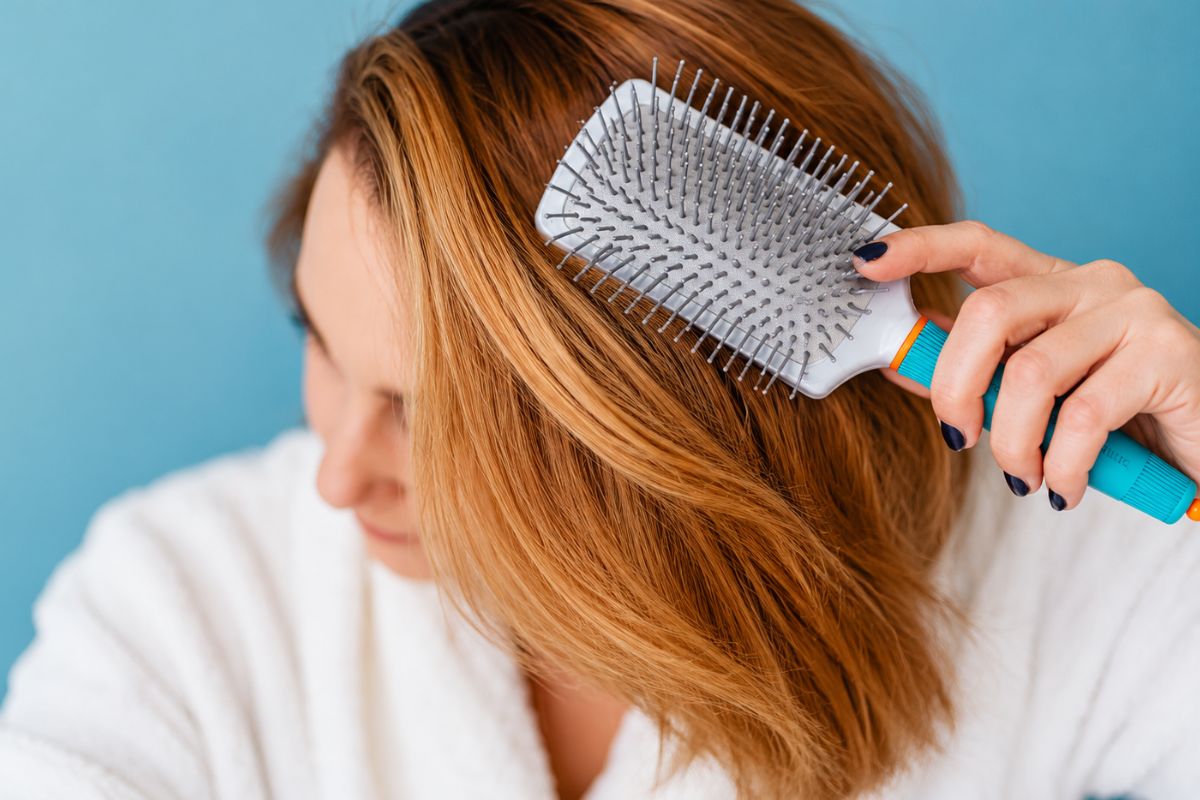
Most people are pretty picky about shampoo, conditioner and treatments - fair. But then they’ll use the same well-worn brush for years and wonder why their ends are snapping.
It’s not exactly doing your hair any favours.
The brush you use absolutely matters. The right one can make detangling easier, reduce breakage, smooth frizz, add volume, and help your styling products actually do their job. The wrong one? Tangles, fluff, snapped strands and a blow-dry that gives up halfway through.
Let’s break it down.
Wet Hair Is Fragile. Be Gentle.
Wet hair is weaker and stretchier than dry hair, which means aggressive brushing can cause breakage fast. If you’re starting at the roots and pulling straight down, your hair is dealing with a lot more tension than it needs to.
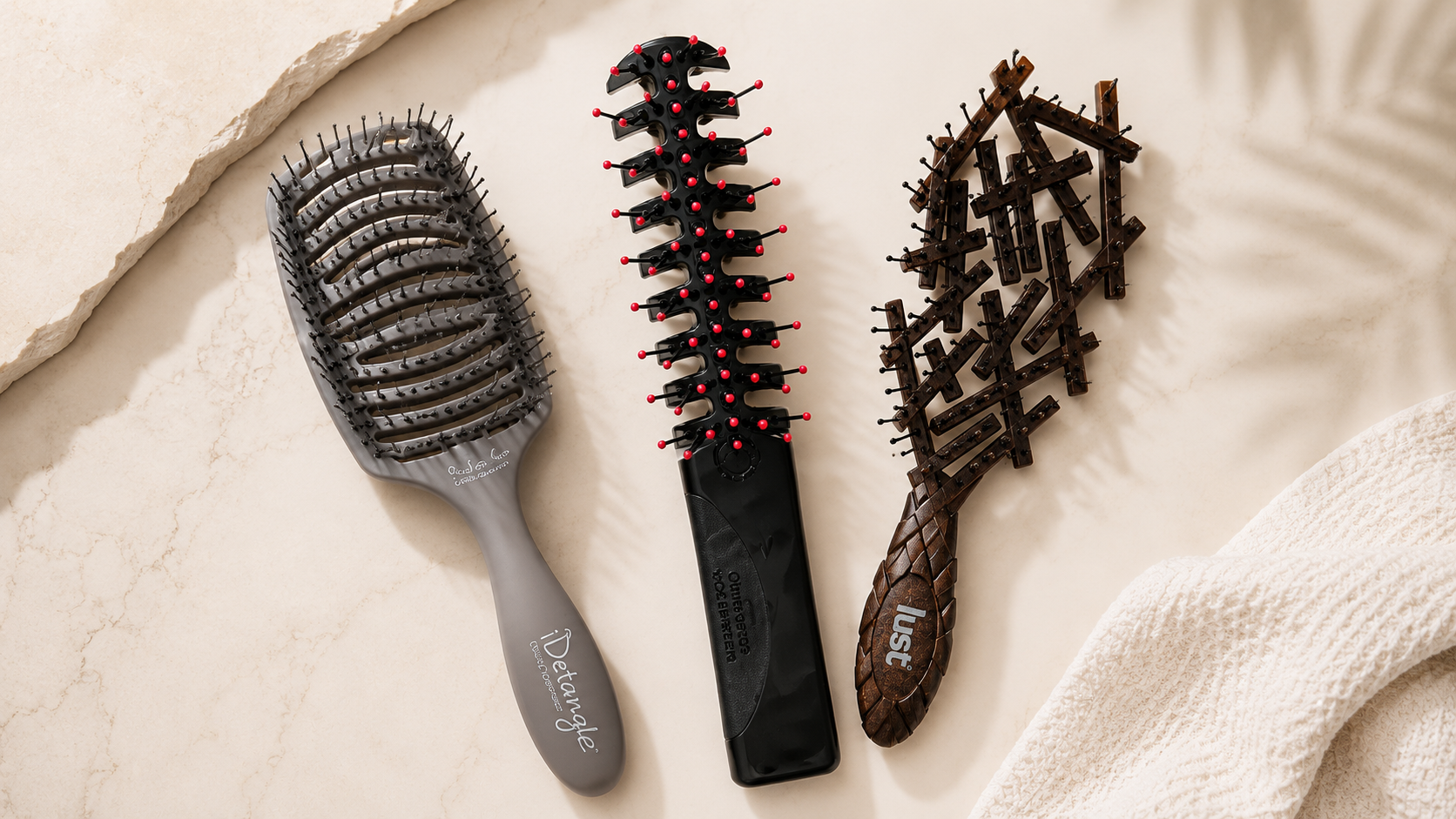
For wet hair, use a detangling brush or wide-tooth comb and start from the ends. Work your way up slowly, adding a leave-in spray or detangler if things are getting knotty. If you want a brush that is made for post-wash tangles, the Olivia Garden Aurora is a solid option, especially if your hair knots easily.
Blow-Drying Without the Arm Workout
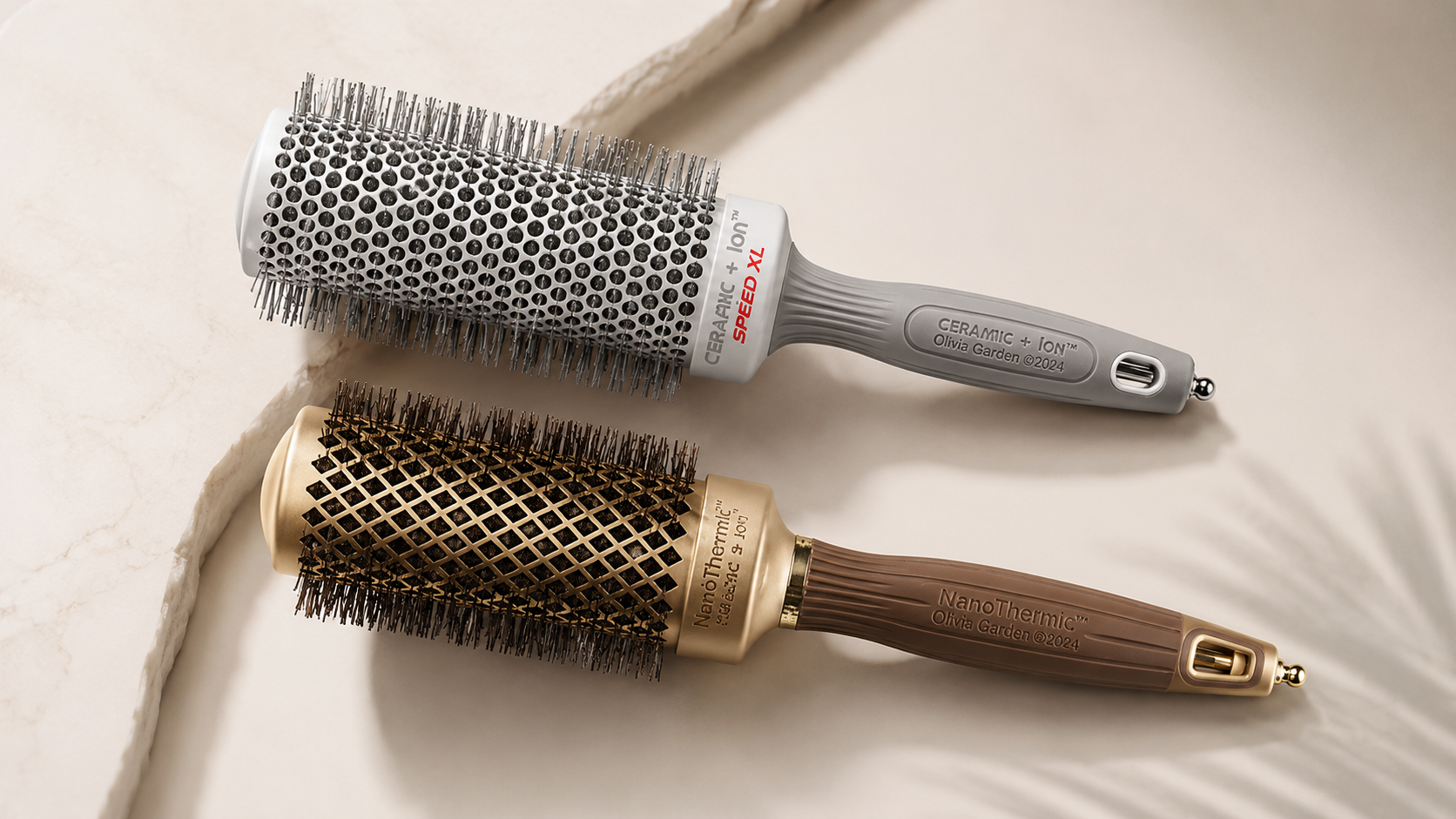
If you blow-dry your hair, your brush is doing more than just holding the hair in place. A good thermal brush can help smooth frizz, add shape, boost shine and create volume while the heat does its thing.
Smaller barrels are better for lift, bend and shorter sections. Larger barrels create smoother, softer finishes through longer hair.
For smoother blow-dries, root lift, and a more polished finish, a thermal round brush like the Olivia Garden Ceramic+Ion Thermal Brush can make styling easier without needing salon-level coordination.
Fine Hair Needs Lift, Not a Fight
Fine hair can be a little sensitive. Too much tension, too much product or the wrong brush, and suddenly all your volume disappears.
For fine hair, look for brushes that encourage airflow and lift without dragging or flattening the roots, like the Cricket Static Free. A vent brush can help with quick drying, while a smaller thermal brush can create shape and bounce.
The goal is volume, not helmet hair. Important distinction.
Thick Hair Needs Control, Not Chaos
Thick, coarse or frizz-prone hair usually needs a bit more strategy. Brushing straight through a full head of thick hair without sectioning is a quick way to end up with breakage, frizz, and a lot of frustration.
Start by detangling gently, then section before styling. A detangling brush helps remove knots without too much pulling, while a thermal brush can help smooth each section properly.
Frizz often gets worse when the cuticle is roughed up, so gentle brushing matters more than people think.
Curls Have Their Own Rules (and They Matter)
Curly and wavy hair should usually be brushed when wet or damp, ideally with conditioner or leave-in product for slip. Brushing curls dry can break up the pattern and create frizz, unless that’s the look you’re going for. No judgement, just something to be aware of.
Use a detangling brush or wide-tooth comb, start from the ends, and scrunch afterwards to help bring the shape back. Something like Olivia Garden I-Detangle Medium can work well before curl cream or styling product, helping remove knots without completely disrupting your curl pattern.
The Brush Cheat Sheet
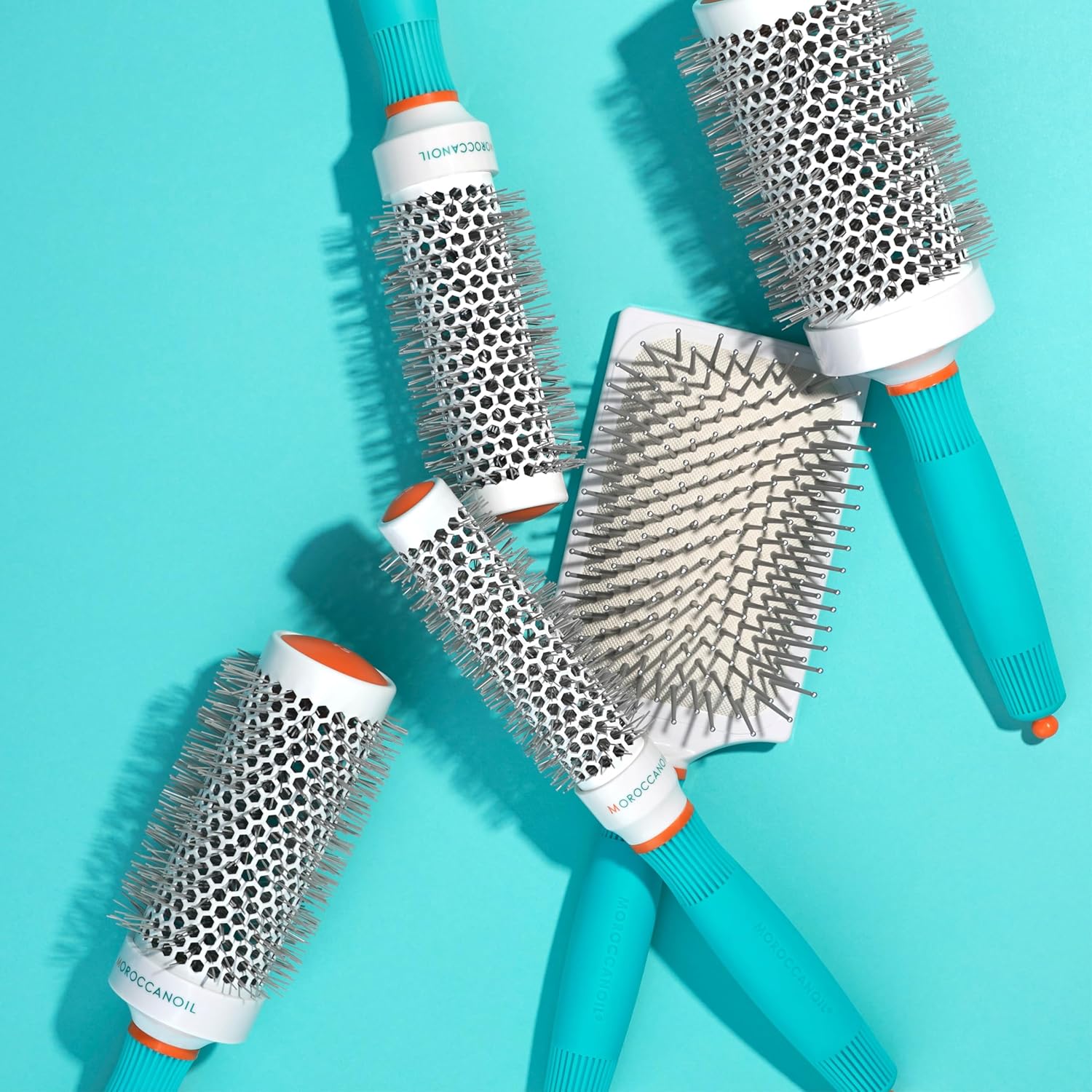
- Detangling brush: Best for knots, wet hair, fragile hair and post-wash tangles.
- Vent brush: Best for airflow, faster drying and lightweight styling.
- Thermal round brush: Best for blow-dries, smoothing, shine, bounce and root lift.
- Paddle brush: Best for smoothing longer hair and everyday brushing.
- Wide-tooth comb: Best for curls, wet detangling and working conditioner or masks through the hair.
Check out our full guide on brush and comb types for a fine-tooth understanding (pun intended!).
Tiny Brush Mistakes, Big Hair Drama
A few little habits can make a big difference.
Avoid:
- brushing wet hair aggressively
- starting at the roots instead of the ends
- using the same brush for every single job
- brushing curls dry
- using too much tension on fragile hair
- keeping an old, damaged brush way past its prime
If your brush looks like it’s been through a lot and the bristles are bent or rough, it may be time for a replacement.
Yes, You Do Need to Clean It
Your brush collects oil, product, dust, dead skin and old hair. Not exactly glamorous.
Remove trapped hair regularly and give your brushes a proper clean every week or two, especially if you use styling products often. Let it dry fully before using it again. A clean brush means cleaner roots, better styling, and less old product being dragged back through freshly washed hair. Which, when you think about it, is fairly important.
Your Brush Is Not Just an Accessory
The right brush can make your whole routine easier. Less breakage, better styling, smoother hair and fewer fights in front of the mirror.
Your shampoo, conditioner and treatments might be doing their job perfectly, but if your brush is causing friction, your hair is still going to have opinions.
So yes, it matters what brush you use. A lot, actually.